

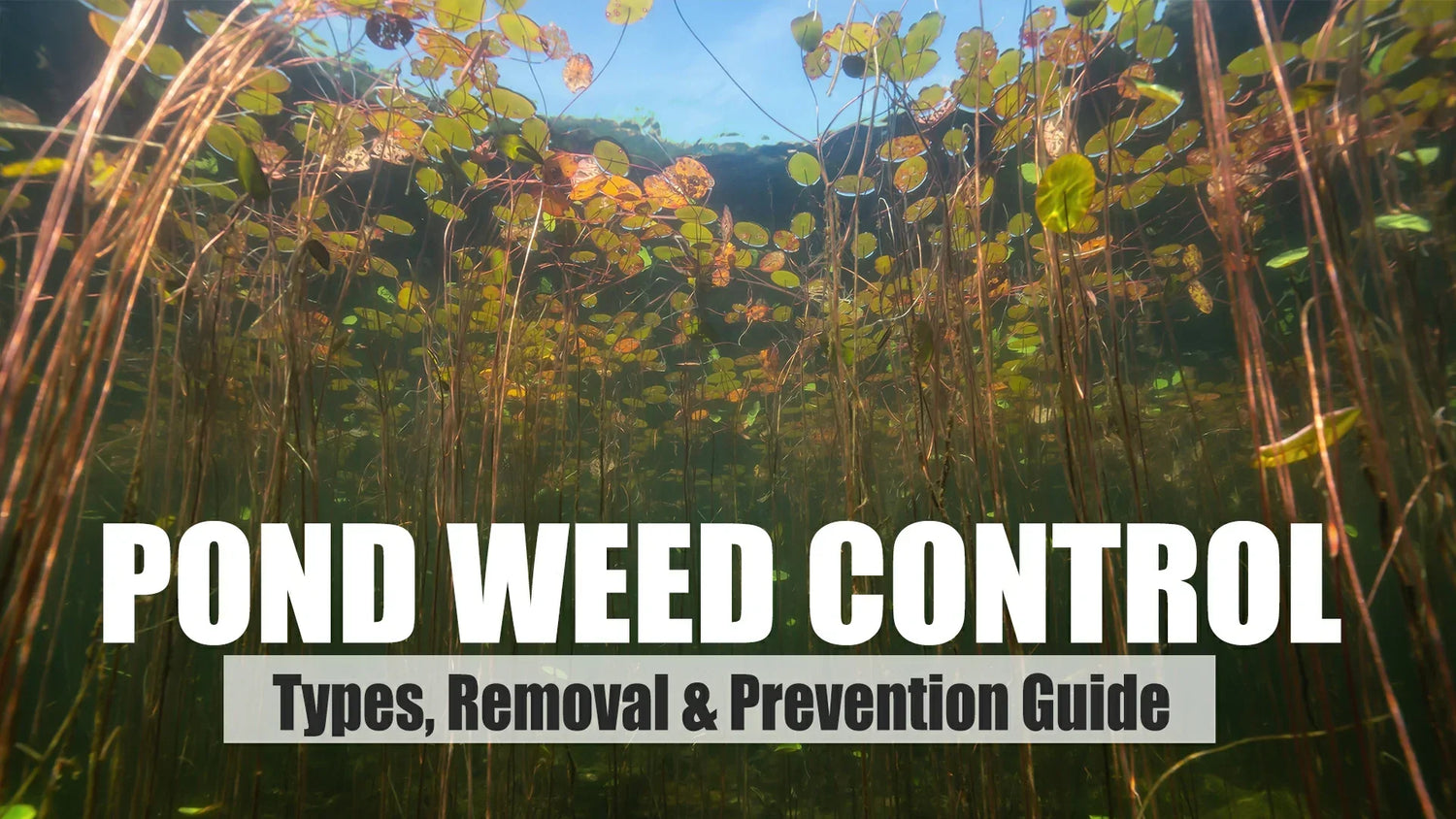
Do you know why pond weeds grow uncontrollably? Sunlight and temperature provide the basic conditions. Additionally, excessive nutrients such as nitrogen and phosphorus which from fish waste, leftover food and the bottom sediment. And the overgrowth of weeds is harmful to fish, as it can cause fish to die due to hypoxia. Even worse, when pond weeds die, it may create unpleasant odors and destroy the water quality of the pond, it's easy for the fish to get sick. In this article, we will discuss the common types of pond weeds, how to identify them, effective control and prevention strategies. You will be able to easily create a sustainable plan for your pond easily after you read this article.
Common Types of Pond Weeds and Identification
Before you can control weeds in a pond, you need to know exactly what's growing in your pond. This is where pond weeds identification comes in. The following are three common pond weeds:
Floating Weeds – These plants, like duckweed and water hyacinth, live on the water's surface. The sunlight is blocked, resulting in a sharp weakening of underwater light, which seriously inhibits the photosynthesis of sinking plants and wither and die. It can harm underwater life and encourage stagnation.
Submerged Weeds – These grow beneath the surface, with roots in the pond bottom. Examples include coontail and pondweed. They grow very quickly and fill a pond, they may tangling in equipment and crowding out fish habitat.
Emergent Weeds – These plants, such as cattails and bulrushes, grow along the shoreline with most of their structure above water. They can gradually take over the pond's edges.

By the way, it is also very important to distinguish between weeds and algae. Algae usually manifests as green slime or turbid water bodies, while real weeds have more complex structures, such as roots and stems. Correct identification is the essential first step in any pond weed control plan.
Analyzing the Causes of Excessive Weed Growth
The excessive growth of weeds in the pond can be caused by a variety of factors, including:
Nutrient Inflow: Due to the rain, your garden's fertilisers and organic waste may flow into your pond, It provides a favorable environment for the pond weeds growth.
Sunlight penetration: If your pond is shallow, sunlight can shine directly to the bottom. Creating ideal conditions for rapid weed growth. But it has a simple way to solve this problem. You can plant some bushes or some tall grasses or some trees on the edge of the pond. And these kind of plants will provide shade for the pond, also help keep the weeds under control.
Poor water flow: stagnant water allows nutrients to accumulate and provide a stable growth foundation for weeds, which will increases the likelihood of aquatic weeds growth. We suggest that installing a pond filter fountain with lights can improve water flow and reduce excessive nutrients (for more information, see here: Pond Filter Fountain).
To resolve these fundamental problems, you will lay the foundation for effective long-term management of aquatic weeds, rather than merely dealing with superficial symptoms.
Safety Control and Eradication of Aquatic Plants in Ponds
If you want to successful pond weed control, you need to requires a balanced strategy. Here are some strategies for your reference:
1. Physical cleaning: Regularly use tools such as lawn mowers, rakes, and other equipment for manual removal. Be sure to remove the roots of the pond weed to avoid they growth again.
2. Chemical Herbicides: If necessary, you can use the environmentally friendly herbicides which designated for removing pond weeds. Before you use it, Always read the instructions carefully to understand all the steps and dosage, be sure to use it strictly according to the instructions to avoid or reduce the harm of fish and other plants in the pond.
3. Biological prevention and control: Utilize herbivorous fish that eat specific aquatic plants as a biological tool to reduce and control the number of weeds, this can help the pond for ecological control.
4. Prevention Through Pond Management: The most sustainable form of pond weed control is preventing growth in the first place. This includes controlling the content of nutrients in the water and improving the quality of water.

A highly effective preventive tool is a Pond Filter Fountain with Light. At least, It should has three crucial functions:
1. Circulation: It breaks up stagnant water, making it harder for weeds to establish.
2. Filtration: It removes algae spores and fine debris from the water.
3. Aeration: It increases oxygen levels, supporting beneficial bacteria that compete with weeds for nutrients.
Integrating a device like this into your pond care routine is a proactive step in pond weed control. You can find a reliable model here: Pond Filter Fountain with Light.
Conclusion
In conclusion, to effectively manage pond weeds, you must identify the types present, determine the underlying causes of their growth, and use suitable control methods. Using products like those from Poposoap can significantly enhance your pond management efforts. For further insights on maintaining your pond, check out our next blog post on the best pond filter guide here.

P2326D 40W 660GPH AC Pond Filter Fountain with Light
$89.99
Keep your pond water clear with the P2326D AC pond filter fountain. Includes pump, multi-stage filtration system, and built-in light for night beauty.
FAQ
You need to control the fish population, it is recommended to put a small quantity first, and check the effect before adding more.
Please check the leaf shape, size, and search the pictures from internet to compare it.
Fountains can destroy the growing environment of weeds, but it may not completely eliminate the existing serious weed invasion. In serious cases, you can use fountains with other control pond weeds methods.
A moderate amount of aquatic weeds is good for fish, the pond weeds can produce oxygen, also and absorb too many nutrients. The purpose of controlling the number of pond weeds is to achieve ecological balance in the pond, not to completely eliminate aquatic weeds.

Laisser un commentaire
Tous les commentaires sont modérés avant d'être publiés.
Ce site est protégé par hCaptcha, et la Politique de confidentialité et les Conditions de service de hCaptcha s’appliquent.