

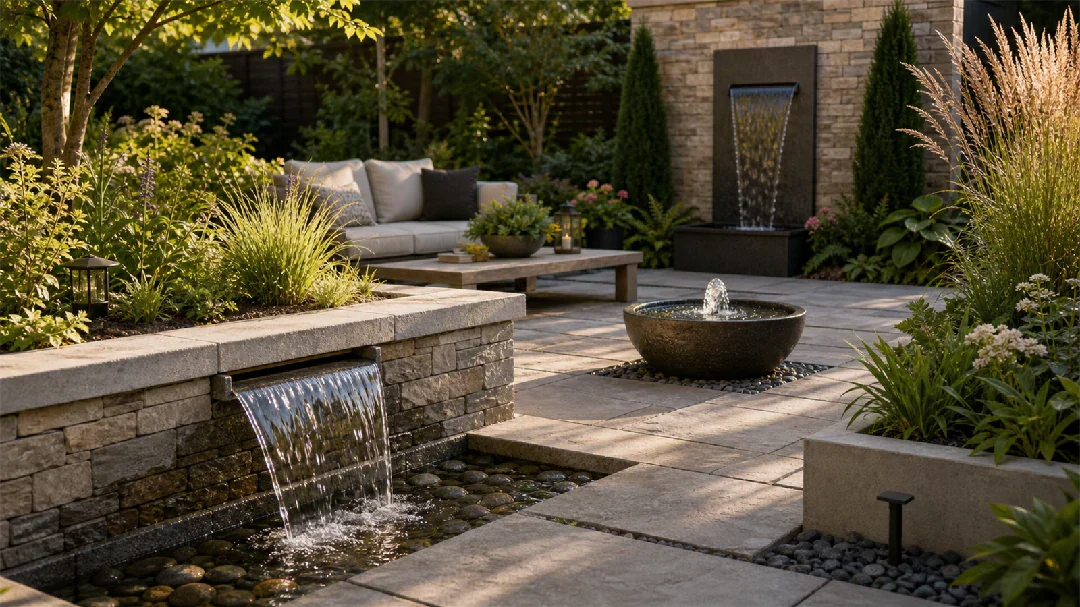
After creating a patio or walkway, it may seem clean yet boring. Hard materials serve their purpose; however, they lack liveliness.
Water features enhance hardscapes by adding dynamic elements, sounds, and soft edges. In this article, you'll learn how to integrate water into your hardscape design effectively.
What Is Hardscaping and Why Are Water Features Important?
Hardscaping includes structural features in a garden or backyard. Such elements are composed of stones, concrete, bricks, wood, etc., and define your garden landscape design.
The majority of backyard hardscaping ideas revolve around structures and shapes. However, sometimes it may seem that the design is missing an essential element.
Why Water Features?
Water features are a perfect addition to a hardscape. They help create harmony between hard materials and dynamic elements.
For example, a small fountain or spillway can:
- Create a pleasant background sound.
- Highlight a particular element.
- Reduce the stiffness of the hardscape design.
Thus, hardscape fountains are popular among garden designers.
A Simple Observation
During my visit to the garden, I noticed that the stone and plant elements looked nice but somewhat dull. The garden seemed dead and still despite the variety of elements. However, after placing a small solar fountain, the place became alive. There were no other changes except for the fountain.
How to Combine Water Features with Hardscape Structures
The best water feature design requires thorough preparation and thoughtful selection of elements. The fountain needs to complement the hardscape and not contradict it.

Size Consistency
The size of a water feature must correspond with the size of the garden.
Placing a large fountain on a small garden patio looks inappropriate. At the same time, installing a tiny fountain in a vast yard seems inconspicuous.
Therefore, water elements must match hardscape proportions.
Material Consistency
The materials of water features should match the hardscape elements.
If you use natural stone on your patio, garden fountain stone designs will suit your landscape. Modern spaces require smooth and polished finishes.
Material consistency will create harmony within the design.
Placement
The placement of water elements plays an important role in the garden.
Typically, fountains are located near seating areas, at the ends of walkways, against walls, and along boundaries.
Thus, water placement is crucial in landscape design with water fountain features.
Popular Types of Water Features in Landscape Design
Depending on the garden size, there are various options for selecting water features.
Wall Fountains for Patios and Courtyards
Wall fountains attach to vertical surfaces. They take up little space and work well in narrow locations.
These fountains are ideal for spaces where floor space is limited.

Freestanding Fountains for Large Spaces
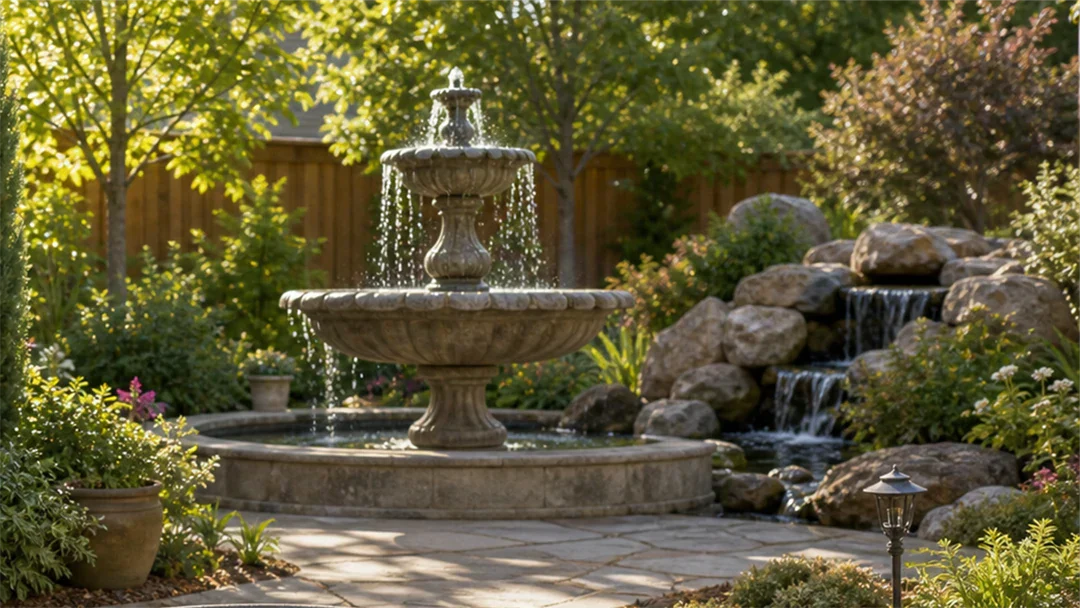
Freestanding fountains sit in the middle of a space. They serve as visual highlights in large gardens.
Thus, freestanding fountain structures are appropriate for big spaces.

Waterfalls and Spillways for Retaining Walls
If your yard has different levels, you may consider installing waterfalls or spillways. Water falls from a higher level to a lower one. It creates additional dynamics in your landscape.
Poposoap waterfall kits with spillways will help you achieve this effect. All systems are easy to install and allow constant water flow.

Small Bubbling Features for Minimalist Spaces
In minimalist gardens, small bubbling features are usually sufficient.
They produce subtle sounds, are compact, and are easy to maintain.

Factors to Consider Before Installing a Water Element
Before placing a fountain, it's important to consider some factors related to its operation and maintenance.
Maintenance and Accessibility
All water features require regular cleaning. You should ensure access to the pump and filter. Otherwise, you may spend a lot of time on maintenance.
Electricity and Water Source
Not all systems need electricity to operate. Some are solar-powered.
Thus, water systems can be installed without complex wiring. For instance, a Poposoap solar waterfall kit with a filter provides filtration, water movement, and quick installation.
Sound Level
The sound level depends on the type of water system.
Strong waterfalls create loud sounds. Quiet bubbling is preferred in small spaces.

Conclusion
Water features become harmonious when integrated into the hardscape. They create dynamics, soften hard materials, and enhance your outdoor space.
The main idea is to choose the right size, materials, and location. Simplicity and functionality will improve your experience.
Poposoap has developed several water systems for outdoor use. Thus, you may find relevant products in the catalog.

55W 580GPH Solar Waterfall Pump Kit with 8" Spillway
$218.99
55W Folding Solar Panel for Efficient Power. Zero electricity cost, no outlet reliance, clogging, high maintenance, noisy operation, and hard installation, keeping water clear for fish and plants.
FAQ
1. What Is Hardscaping?
These are non-living elements that define your garden landscape.
2. Why Use Water Features in Hardscape Design?
They add dynamics and sounds and harmonize hard surfaces.
3. Which Water Feature Is Preferable for a Small Patio?
Wall fountains and small bubbling features are preferable.
4. Are Water Features Challenging to Maintain?
No, if you select simple water systems.

Laisser un commentaire
Tous les commentaires sont modérés avant d'être publiés.
Ce site est protégé par hCaptcha, et la Politique de confidentialité et les Conditions de service de hCaptcha s’appliquent.