

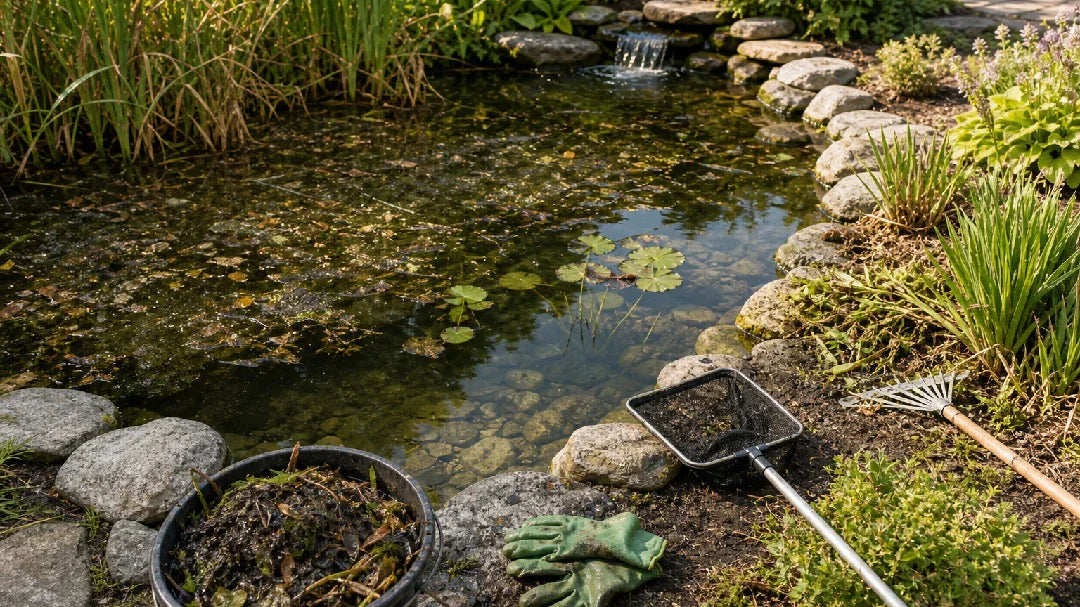
An old pond may gradually deteriorate.
The water grows dark, the bottom accumulates sludge (soft, partially decayed matter), and the vegetation overgrows.
The fish become lethargic, and the entire ecosystem looks neglected.
Therefore, pond renovation is required in these cases.
There is no need to reconstruct the water body completely; with a comprehensive assessment and maintenance program, you can easily revive it with minimal harm to the ecosystem.
Step-by-Step Guide to Restoring a Pond
Step 1: Full Pond Assessment

The first step in bringing an old pond back to life is a detailed analysis of its current state.
Look at the water color.
- Light green indicates excessive algae growth.
- Brownish or gray means there is much organic waste in the pond.
Inspect the bottom; the presence of significant amounts of sludge indicates the need to eliminate it.
Also, carefully check the banks for integrity and stability.
In case of leaks, repair the liner.
This way, you will identify problem areas in advance and act accordingly.
Step 2: Removal of Debris and Excessive Sediment

One of the crucial stages of a pond renovation process is cleaning.
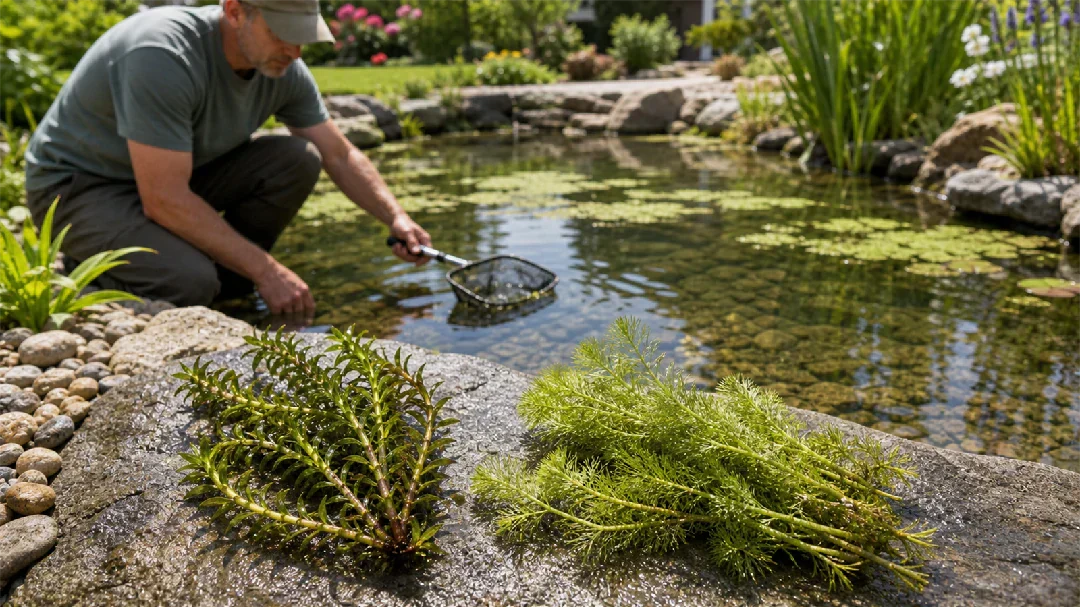
First of all, it involves removing visible debris like fallen branches and foliage.
These elements gradually rot and form sludge.
Next, remove excessive sediment using a specialized pond vacuum or manually.
This helps restore pond depth and increase water quality.
Prune the overgrown plants.
While necessary, excessive vegetation prevents sunlight from reaching the bottom and creates low-oxygen zones.
With this stage complete, the pond will become noticeably tidier.
Step 3: Repair and Renovation of Structures
Step 3.1: Fixing Pond Liners and Banks

Now that the pond has been cleaned up, you should think about its structure.
In the case of a damaged liner, water will constantly seep out.
Thus, it is necessary to fix or replace the liner as part of the pond refurbishing process.
Here is where you may find liners for your project.
For a natural pond, inspect the soil banks.
In case of any weaknesses, reinforce them with rocks or plants to stop erosion (a process of soil transportation by water).
Step 3.2: Improvement of Water Circulation

Water stagnation causes problems in the pond.
Using a solar fountain pump will help enhance water circulation (its constant movement throughout the water body).
This helps prevent the accumulation of waste and low-oxygen areas. A pond waterfall can also create a continuous return flow, helping refresh the water while adding a natural focal point to the renovated pond.
Improving circulation will boost oxygen supply, which is important for fish and plants.
Step 3.3: Upgrade the Pond's Filtering System

Filtering is another essential factor for long-term water quality.
If you have no filtration equipment or it is outdated, install a new device.
It will help you get rid of particulate matter and support healthy bacteria in the water.
Modern filtering systems are designed to simplify installation and maintenance.
Step 4: Pond Ecosystem Restoration

Step 4.1: Re-Balancing Vegetation
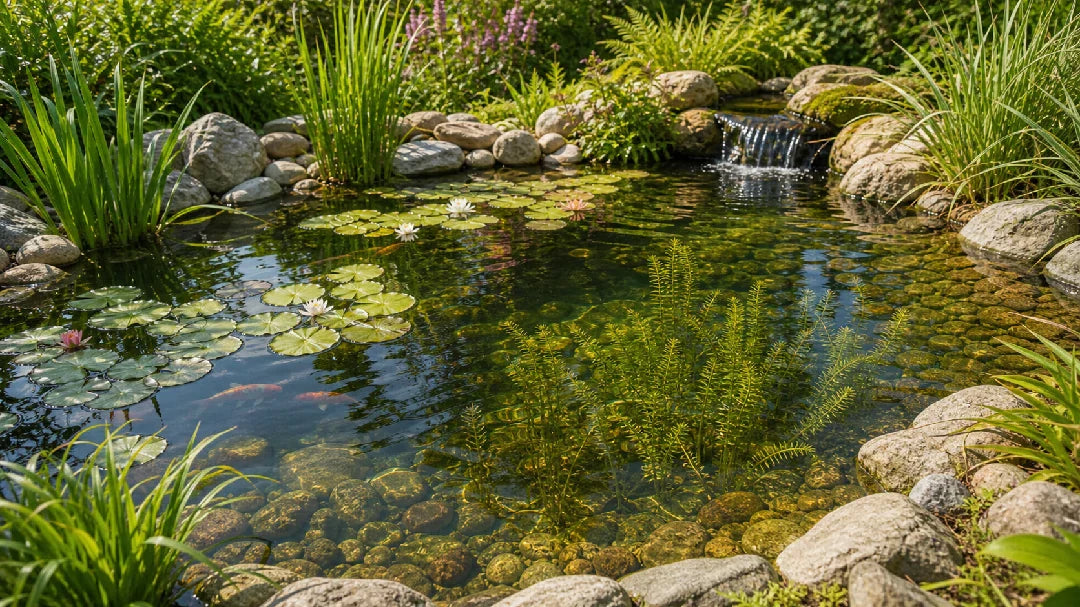
The right amount of plants is crucial for the health of the ecosystem.
Introduce plants with different functions:
- Floating plants to minimize direct sunlight exposure
- Submerged plants for oxygen release
- Plants growing along the banks to stabilize the structure
Do not allow any type to prevail in the pond.
Balancing is more important than quantity.
Step 4.2: Improve Water Quality
There is no need for rapid actions to raise water quality.
Give the pond some time to achieve harmony through efficient filtration, adequate plant cover, and proper water flow.
Such an approach guarantees better results with minimal impact on fish and other wildlife.
Step 4.3: Attract Wildlife
When the ecosystem is healthy, it naturally attracts living beings.
Some frogs, insects, and even birds may settle in the pond, which is a good sign.
However, make sure that the pond does not become overpopulated with plants and fish.
Nature requires moderation.
Pond Restoration: Long-Term Maintenance
Step 1: Keep Up With a Simple Maintenance Schedule
After restoring a pond, its maintenance will be effortless.
Clean out debris regularly.
Service the filters according to their recommendations.
Trim excessive vegetation to avoid complications.
A few easy steps will help you prevent problems.
Step 2: Monitor Water Levels and Conditions
Always pay attention to the water state.
If it decreases rapidly, it may indicate a leak.
In the case of significant water discoloration, look for the reasons.
Identifying problems at early stages will help you save time and effort.
Step 3: Proper Maintenance of Equipment
Your pumps and filters will also require maintenance.
Wipe off any dirt and remove possible blockages to maximize the lifespan of devices and avoid problems.
Step 4: Make Changes Based on the Season
Every season brings unique challenges.
- Spring – prepare for vegetation growth
- Summer – watch out for low oxygen levels
- Fall – clear out leaves
- Winter – take care of the equipment
Seasonal maintenance helps stabilize the ecosystem.
Conclusion
Pond renovation requires a gradual approach that combines many actions.
By assessing the pond's condition, eliminating debris, repairing structures, and maintaining equilibrium, you will successfully revive it.
Working with nature, not against it, will guarantee healthy conditions in the pond: clean water, adequate water flow, and sufficient vegetation.
Poposoap supplies useful tools for pumps, filters, and maintenance.
Its products make it easy and convenient to manage a natural water feature.
More information on how to fix various pond-related issues may be found [here]

SPF326 20W 280GPH Solar Pond Filter Fountain
$119.99
Clean and oxygenate your pond with this 20W solar pond filter pump. Eco-friendly 280GPH flow ideal for small to medium backyard water features.
FAQ
How do I know if my pond needs renovation?
If the water is turbid, murky, or shallow, and there is plenty of sludge, your pond needs to be renovated.
Can I restore my pond without draining it?
It is possible for light cleaning; however, if you want a full renovation, it may require draining.
How often do I need to clean my pond after renovation?
Regular maintenance is recommended, while in-depth cleaning can be done once or twice per year.
Is a filter necessary in a pond?
Yes, a filter is essential for maintaining high water quality.

Laisser un commentaire
Tous les commentaires sont modérés avant d'être publiés.
Ce site est protégé par hCaptcha, et la Politique de confidentialité et les Conditions de service de hCaptcha s’appliquent.