

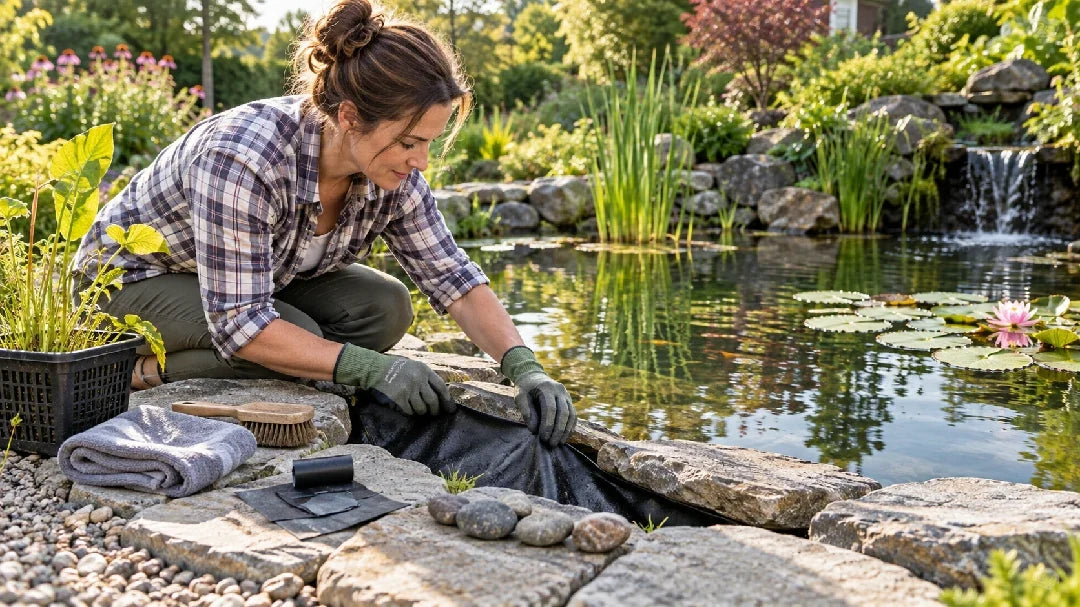
A pond liner forms the basis of many backyard ponds. It contains water, serves as structural protection, and contributes to creating a stable ecosystem for fish and plants. Despite being quite durable, a pond liner can still experience some wear and tear over time. Many pond owners are interested in things such as whether chlorine will damage a pond liner, whether lotus plants can damage a pond liner, or how to find a leak in a pond liner. Knowing the common causes of pond liner damage will help you protect your pond from further deterioration and costly repairs.
What Causes Physical Damage to Pond Liners?
Physical damage is probably one of the most common causes of pond liner problems.
Sharp objects, plants, animals, and poor installation can lead to physical damage to the liner surface.
Even though a pond liner is designed to withstand outdoor conditions, it is not impossible to damage it. This usually happens due to prolonged pressure applied to one point.
Rocks and Sharp Objects
Sharp rocks are one of the most dangerous factors in pond installation.
Little stones, gravel, or leftovers from construction can exert pressure on the liner surface. With water pressure, this can create weak points in the liner.
It is necessary to clean the pond area thoroughly and prepare the underlayment (a special protective layer laid under the liner) before laying a liner.
Protective underlayment is very helpful for a pond located in rocky areas.

Animal Damage
Wildlife can become a potential cause of pond liner problems.
While animals do not try to damage your liner, their actions can cause problems.
Possible animal-related causes include:
- Digging around the edge of the pond
- Contact between sharp claws and the exposed liner
- Root systems of disturbed plants
- Pets walking on the liner
Covering the edges of a liner with rocks or plants can help you increase the safety of the liner.

Tree Roots and Aquatic Plants
Tree roots growing beneath the pond can cause additional pressure on the liner.
As the roots grow larger, they can create weak points on the liner surface.
Some aquatic plants can also raise some questions for pond owners.
People want to know: Can lotus plants damage a pond liner?
The answer is yes, they can, if not controlled properly.
Lotus plants reproduce by means of rhizomes (horizontal stems of a plant that spread and grow roots). In a container, they usually don't cause any problems. If left to grow freely, their root systems can create additional pressure against the liner.
Growing lotuses in special planting containers is recommended.

Poor Installation and Water Pressure
A pond liner should be properly installed to perform well.
Mistakes in installation include:
- Using a liner that is too small
- Stretching the liner too tight
- Lack of underlayment
- Creating pressure points
The water itself puts a lot of pressure on the liner. If the pond form is not properly prepared, some areas of the liner will experience more pressure than others.
A good installation should guarantee enough flexibility for normal ground movements and thermal changes.
Sediment and Debris Buildup
As time passes, a pond collects leaves, mud, and other debris.
Too much sediment buildup can cause several problems:
- Additional pressure on the liner
- Poor water circulation
- Harder leak detection
- Poor water quality
Routine pond cleaning is an effective way of preventing the buildup.
Adding a proper circulation system (such as a pond pump or filtration system) can also help to avoid stagnation and keep the pond cleaner.
Chemical and Environmental Factors That Affect Pond Liners
Since a pond liner is exposed to changing weather conditions and different kinds of water, chemicals, UV light, and temperature changes can affect liner performance over time.
Will Chlorine Damage a Pond Liner?
Yes, high levels of chlorine can cause liner damage over time.
While chlorine is very effective for swimming pools, it is far from perfect for natural ponds.
Beneficial bacteria are responsible for a healthy ecosystem, and chlorine destroys them.
High chlorine exposure can:
- Reduce the flexibility of the liner
- Affect the liner material
- Harm the pond ecosystem
If you are going to add tap water to your pond, it is better to use a pond-safe water conditioner, allowing chlorine to evaporate before adding fish and plants.
UV Light Exposure
Another factor affecting pond liners is sunlight.
UV light can slowly degrade any material.
This is the reason why leaving the liner uncovered for many years can reduce its lifespan.
To protect the exposed areas of the liner, you can use:
- Rocks
- Gravel
- Aquatic plants
- Decorative edging
This will not only help to protect the liner but also decorate your pond.
Temperature Changes
Any outdoor pond experiences temperature changes.
Heat can soften certain materials, and freezing temperatures can create expansion pressure.
In winter, ice can put pressure on pond edges and damage the liner.
Regular seasonal maintenance can help to avoid this kind of problem.
How to Find a Leak in a Pond Liner
It is important to find the leak as early as possible. To do this, you need to confirm that the loss of water is indeed caused by the liner.
Check Water Loss
Every pond loses a small amount of water through evaporation.
To identify whether your pond is leaking:
- Fill the bucket with water from the pond.
- Put the bucket beside the pond.
- Mark the water level in both.
- Compare these levels after one day.
If the water level in your pond lowers significantly faster than the water level in the bucket, there is a chance that you have a leak.

Check Pond Equipment First
Not all water losses are caused by the liner.
Before searching for any holes, check:
- Pump connections
- Filter pipes
- Waterfall areas
- Tubing joints
Sometimes the hole can be created by a loose connection.
Look for the Water Stopping Point
One of the signs is the point when the water level stops dropping.
If the water is lowering until it reaches a certain level and then it stops lowering, then the leak is close to this level.
Check:
- Pond edges
- Plants in that area
- Covering rocks
Inspect the Liner Carefully
Remove all the debris and inspect the visible areas of the liner.
Check for:
- Small holes
- Tears
- Scratches
- Root damage
- Weak points
Small damage can be easily fixed using pond liner repair kits.
Tips to Prevent Pond Liner Damage
Preventing any kind of damage is easier than repairing a leaking pond.
Use Protective Layers
A good liner should always have some protection underneath.
An underlayment can help you to prevent:
- Rock punctures
- Soil pressure
- Damage by small objects
Choosing a high-quality liner can also help to avoid future troubles.
Maintain Proper Water Movement
Improper water circulation can lead to buildup and other problems with your pond.
Having a pond pump and filter fountain will help you:
- Move the water continuously
- Reduce the buildup
- Have cleaner water
If you are looking for a convenient solution for improving the circulation of your pond, Poposoap has some useful products for pond owners: Poposoap pond pumps and filtration systems.

Control Plant Growth
Aquatic plants make ponds beautiful, but sometimes plants need to be controlled.
For aggressive plants like lotus, it is recommended to:
- Grow them in planting containers
- Trim roots regularly
- Prevent uncontrolled spreading
Do Regular Inspections
A quick inspection every month will help you to find small problems before they get worse.
Inspect:
- Water level changes
- Pump performance
- Plant growth
- Pond edges
- Visible areas of the liner
Such maintenance will significantly increase liner lifespan.
Protect Your Pond Liner for Long-Term Enjoyment
Your pond liner plays an important role in keeping your water garden in good condition. The most common reasons for liner problems are sharp objects, plants, chemical exposure, temperature changes, and poor installation.
The best way to prevent any problems with your pond is to install the liner properly, use protective layers, maintain proper water circulation, and inspect it regularly.
With the help of proper equipment and maintenance, your pond liner can serve you for many years. Poposoap is focused on simplifying the process of keeping the water garden and providing useful solutions for water circulation and filtration for homeowners.

660GPH Floating Fountain with LED Light
660GPH pump, 7-color LED lights, 3 spray patterns, 27ft cord and anchors.
Shop NowFAQ: Common Causes of Pond Liner Damage
1. What are the most common causes of pond liner damage?
The most common causes include sharp rocks, tree roots, animal activity, poor installation, UV exposure, and extreme temperature changes. Using protective underlayment and inspecting your pond regularly can help prevent damage.
2. Will chlorine damage a pond liner?
Yes, high chlorine levels can damage certain pond liner materials over time, reducing their flexibility and durability. Chlorine can also harm fish, aquatic plants, and beneficial bacteria. Always treat tap water with a pond-safe water conditioner before adding it to your pond.
3. Can lotus plants damage a pond liner?
Yes, lotus plants can potentially damage a pond liner if their rhizomes spread uncontrollably. As they grow, they may create pressure against the liner. Planting lotus in dedicated containers and controlling root growth can help protect your pond liner.
4. How to find a leak in a pond liner?
Start by comparing pond water loss with evaporation using a bucket test. Next, inspect pump connections, filter pipes, and waterfall areas for leaks. If the water level stops dropping at a certain point, carefully examine the liner around that level for holes or tears.

Laisser un commentaire
Tous les commentaires sont modérés avant d'être publiés.
Ce site est protégé par hCaptcha, et la Politique de confidentialité et les Conditions de service de hCaptcha s’appliquent.