

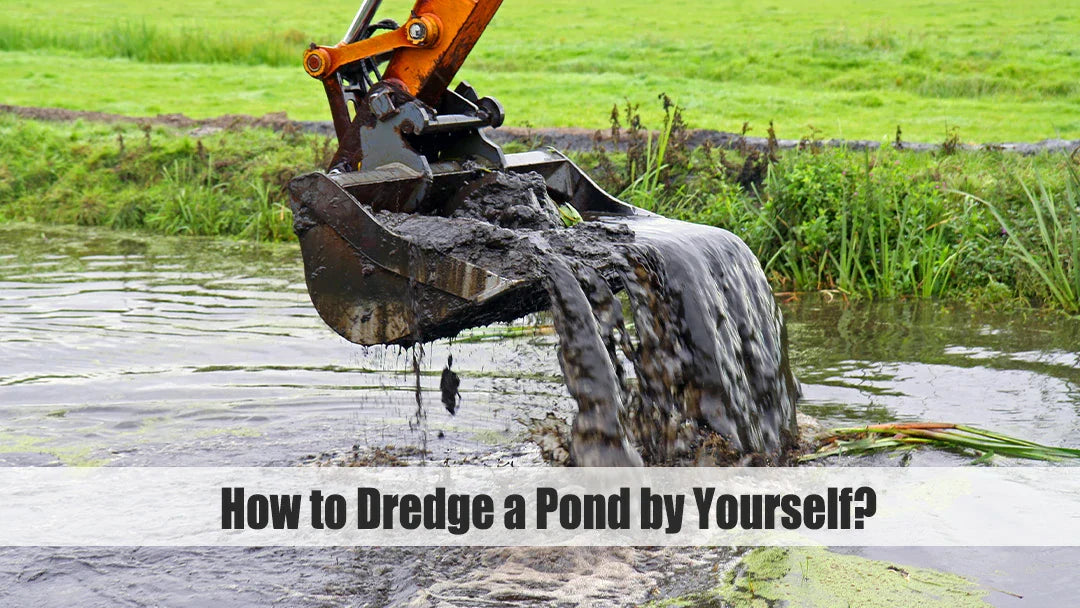
If you've ever had a backyard pond for more than a couple of years, you know how the muck just seems to build up on the bottom over time. Leaves sinking in during fall, fish poop, decomposed algae, and even a little dirt washed in during storms—all sink to the bottom, piling up and forming a thick layer of sludge. Eventually, buildup degrades water clarity, depletes water oxygen levels, and can even impact the health of the fish. Sooner or later, every pond owner asks: Can I handle pond dredging on my own, or will I need to rent heavy machinery?
The good news is that dredging a pond can be absolutely done as a DIY project—with some planning, patience, and simple tools. You won't remove every inch of sediment the way industrial dredgers do, but you can restore depth, improve water quality, and give your pond a healthier foundation—all without paying thousands of dollars.
Below is a realistic guide to dredging a pond yourself, including what tools to use, how to stay safe, and when a homemade method works best.
Why Pond Dredging Matters
Over time, sediment accumulates, and ponds become shallower. Shallower water heats up more quickly, carries less oxygen, and invites heavy algae blooms. Fish become stressed, pumps clog more often, and plants suffer. Dredging a pond resets its natural balance by:
- restoring depth
- improving circulation
- reducing nutrient overload
- preventing winter fish kills
- removing anaerobic sludge responsible for foul odors
Dredging a pond yourself is not glamorous; however, it has the potential to dramatically improve the long-term health of your pond.
Signs Your Pond Needs Dredging
You don't have to have fancy equipment to know when it's time. Look for:
- murky water that does not clear even with filtration
- sludge you can stir with a stick
- spreading aggressively rooted plants
- fish gasping during warm weather
- areas that are noticeably shallower than a year or two ago
If any of these sound familiar, dredging will help.
Can You Really Dredge a Pond Yourself?
Yes—especially if your pond is of small to medium size. Even very large ponds can be improved with repeated efforts using this DIY approach.
Professional dredging uses barges, pumps, or excavators. DIY pond dredging relies more on manual removal, simple suction setups, and homemade dredge for pond tools that lift muck gradually rather than all at once.
Think of it as a seasonal maintenance project rather than a one-day overhaul.
Best DIY Methods to Dredge a Pond
Practical approaches used by ordinary homeowners are enumerated below.
1. Manual Raking and Shoveling
This will not remove deep sediment but is effective for ponds suffering from overgrowth of plants or surface muck.
What you will need to get started:
- long-handled rake
- pond net
- chest waders or waterproof boots
This works nicely around the edges or shallow areas where sludge piles tend to be noticeable.

2. Using a Sediment or Sludge Pump
The sludge pump is one of the most effective do-it-yourself tools. Such pumps are normally created for relocating water mixed with solids.
To use them effectively:
- place the intake hose at the bottom
- slowly drive through high-sludge sections
- direct the outflow into a filter pit or tarp area where solids can settle out before water returns to the pond
It's not as powerful as commercial pond dredging but takes out a surprising amount of mud.

3. The Homemade Suction Dredge Method
Many pond owners build a homemade dredge for pond cleaning using:
- a trash pump
- a wide PVC intake
- a flexible discharge hose
The idea is like vacuuming leaves from the bottom of a swimming pool, only on a much larger scale. The DIY dredging method works best when sediment is soft and loose. It also lets you target certain areas without draining the entire pond.
Here is a video by John Jacobs about How to Build a Hand Suction Dredge (for learning and reference):
4. Partial Pond Drain + Sediment Removal
With heavily filled ponds, draining part of the water provides access to compacted muck.
Steps:
1. Pump the pond down to 30–50% capacity.
2. Shovel or rake out thick sludge while it's exposed.
3. Replace with fresh water after material is removed.
This option is the most labor-intensive but also the most impactful option, especially for an older pond.
5. Dredging While Keeping Fish in the Pond
Yes, you can keep fish in the pond while dredging, but you'll need to:
- avoid stirring the entire bottom at once
- work in sections over days or weeks
- keep aeration running to maintain oxygen levels
Too much gas release at one time from anaerobic sludge will stress your fish.

How to Dredge a Pond Yourself: A Step-by-Step Guide
Step 1 — Assess the Depth and Sludge Level
Use a long pole to probe various spots to estimate the depth of your layer of muck.
Step 2 — Choose Your Method
Suction pumps work on soft sediment. Heavy sludge is removed manually or by partial drainage.
Step 3 — Prepare a Dump Area
Dredged sediment is nutrient-rich. Many pond owners compost it or spread it in garden beds after it dries.
Step 4 — Work in Small Sections
Dredging stirs up nutrients, so slow and steady is safer for the pond ecosystem.
Step 5 — Observation of Oxygen Levels
Consider operating a fountain or aerator during dredging. Disturbed sediment can cause short-term oxygen drops.
Step 6 — Allow Water to Settle
Allow the pond to settle for 24 hours after each session.
Step 7 — Repeat as Necessary
DIY pond dredging is often a multi-day or multi-week project.
Tips for Safe and Effective DIY Dredging
- Never stand in deep muck without a partner nearby.
- Wear gloves and waders—sludge may contain sharp debris.
- Do not disturb too much at a time, especially if fish are about.
- Employ aeration to keep the water in an oxygenated state throughout the process.
- Avoid dredging during summer heat when the water oxygen levels are naturally low.
When Should You Hire a Professional Instead?
Sometimes DIY just isn't enough. Hiring help might be a good option if:
- your pond is several acres
- sludge is deeper than 18–24 inches
- the pond is the principal water source for livestock or irrigation
- the pond has structural problems, such as collapsing banks
Great for routine maintenance, DIY methods cannot replace industrial equipment for any extreme buildup.
Final Thoughts
Dredging a pond on your own requires some elbow grease, but it's easily one of the most rewarding maintenance projects a pond owner can address. Restored depth brings clearer water, healthier fish, stronger plant growth, and a more stable ecosystem overall. Whether you're using a homemade dredge for pond cleaning or sticking to a simple rake-and-pump approach, consistency is much more effective than allowing years of sludge to build up. With a little time and some simple tools, you can save quite a bit of money while restoring your pond to its natural glory.
READ MORE: Pros and Cons of Pond Liner vs. Preformed Ponds

15W Solar Pond Aerator with 4400mAh Battery
$89.99
Ensure healthy oxygen levels in your pond with this 15W solar aerator. Equipped with a 4400mAh battery, it runs day and night, perfect for small ponds and fish.
FAQs -- DIY Pond Dredging Guide
Yes, you can dredge small to medium-sized ponds yourself with manual tools (rake/shovel), sediment/sludge pumps, homemade suction dredges, or partial drainage methods. Professional help is recommended for ponds over several acres, sludge deeper than 18–24 inches, or ponds with structural issues/critical water use (livestock/irrigation).
Signs include murky water that won’t clear with filtration, stirrable sludge (via stick), aggressively spreading rooted plants, fish gasping in warm weather, and noticeably shallower areas compared to 1–2 years prior.
Key tips: Never stand in deep muck without a partner; wear gloves/waders (sludge may have sharp debris); work in small sections to avoid overwhelming the ecosystem; keep aeration running to maintain oxygen; avoid dredging in summer heat (naturally low oxygen levels); allow water to settle 24 hours after each session.


Laisser un commentaire
Tous les commentaires sont modérés avant d'être publiés.
Ce site est protégé par hCaptcha, et la Politique de confidentialité et les Conditions de service de hCaptcha s’appliquent.