

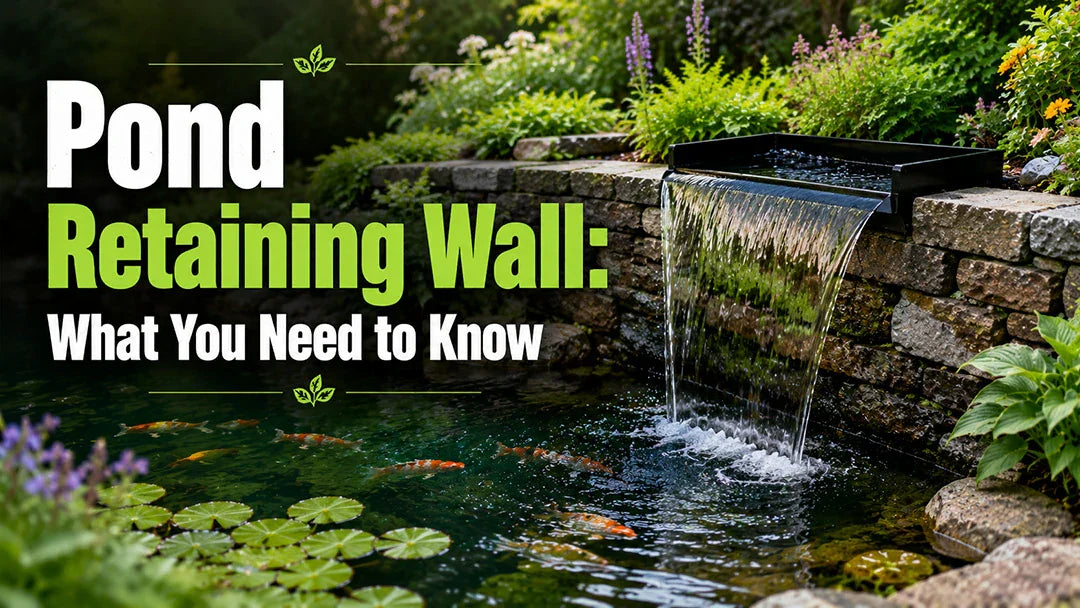
A pond retaining wall is a structure designed to provide support along a portion or the entire perimeter of a pond. Although it serves a purpose visually, its importance is not entirely aesthetic. A retaining wall is important in a pond since it prevents soil sliding, supports pond liners, and ensures pond water is at a constant level. Pond owners have been facing a number of issues over the years, including pond erosion and pond edges collapsing. This article discusses the importance of pond retaining walls, the types of retaining walls, and how to plan a retaining wall for a pond.
Why Pond Retaining Walls Matter for Long-Term Stability

Water, as a substance, is quite heavy. Soil, as a substance, is quite unpredictable. When these substances meet, complications will slowly arise.
When a pond has the support of a retaining wall structure, it provides resistance to the soil pressure that naturally occurs at the pond's edge. Soil movement is also caused by factors such as rainfall and the freezing and thawing of water. In the absence of support structures, the pond's edge naturally sags inwards or becomes washed away.
Retaining walls of ponds also play an essential role in retaining the original shapes of the ponds. When the soil collapses, the water level of the pond changes. It may stress fish and vegetation.
Additionally, there is an ecological advantage to be gained from this. Plants along the pond's perimeter require a secure base to secure their roots in the ground. When there is erosion, it makes it difficult for the plants to thrive, and there may be an increase in algae growth as a result.
From a safety point of view, pond retaining walls provide clear boundaries. This helps to eliminate slippery conditions as well as make maintenance easier. A stable structure is important for pond health as much as its looks.
Common Materials Used for Retaining Walls Around Ponds
Material selection depends upon budget, style, and the height that the wall needs to cover.

Natural Stone
Stone is often used in retaining walls that surround ponds because it has an organic look. The irregular shapes go very well with ponds. The gaps between the stones allow drainage of the water. The installation process requires time, but the material is very durable.
Concrete Retaining Blocks
They are regular in shape and can be stacked easily. Most of these blocks can be connected to each other for increased strength. These blocks can be used for modern landscape designs and for building high pond walls. Drainage behind the pond wall is important to prevent the buildup of pressure.
Poured Concrete
Poured concrete makes for a good barrier as it is very effective at carrying large loads and lasts for many decades. It is important to have good planning and skilled labour to pour concrete surfaces. It looks harsh without treatment around water surfaces.
Timber (Limited Use)
Treated wood may be used in small retaining walls in a pond. It is cheap and easy to install. Over time, it will not last long after being exposed to moisture. It should be used in small and temporary designs.
Drainage is always important. Gravel fill aids in the protection of the wall from failure by forming drainage channels.
Creating a Pond Retaining Wall That Fits Your Landscape
A retaining wall for a pond must complement it but not overwhelm it.

Work with Existing Contours
Curved walls follow the form of the pond and look more natural. Straight walls look formal. Matching the walls with the landscape is important for visual balance.
Integrate Water Features
Retaining walls can be used to hold waterfalls or spillways. They are useful in hiding any plumbing and creating the height needed to hold water. This provides a water feature with sound and activity.
For example, the Poposoap Electric Waterfall Pump Kit can be installed right into a retaining wall. The retaining wall will serve as a framework, and the spillway will return the water smoothly back to the pond.
Installation Practices to Prevent Failure
- Dig a level trench in advance of construction.
- Compact the base using crushed stone.
- Step the wall slightly back as it rises to gain strength.
- Install drainage behind the wall.
By skipping these steps, there is a tendency for the wall to lean or crack in the long run.
Maintenance Planning
Every year, the wall should be checked for signs of stones being disturbed, bulges, or clogging of the drainage area. Debris should be removed to prevent long-term damage.
Conclusion
A properly constructed pond retaining wall is more than just an aesthetic design for the landscape. In fact, the pond retaining wall can help protect the pond itself, stabilise the earth, and minimise future maintenance issues. While aesthetics can play an important role in the design of the pond retaining wall itself, proper planning and drainage design take precedence over looks. Should your design require water to flow, retaining walls and waterfalls are a good combination.
Poposoap waterfall solutions have been developed to seamlessly integrate with these builds. Browse Poposoap Waterfall Solutions.
Click to read Pond Renovation Stories from our real customers.
Strong foundations always lead to longer-lasting ponds.

40W 660GPH Electric Waterfall Pump Kit with 8"x4.3" Spillway
$119.99
Create stunning waterfalls with this 40W 660GPH pond waterfall kit. Perfect for small ponds & backyard water features. Durable, efficient & easy to install.
Frequently Asked Questions
Do Ponds Really Require Retaining Walls?
No. Flat ponds may not. Raised or sloped ponds usually do.
How High Can a Pond Retaining Wall Be?
Low walls are DIY-friendly. Taller walls may require engineering advice.
Can Plants Be Used on Retaining Walls?
Yes. Many designs provide space to accommodate pockets or ledges to hold plants.
What Is the Most Common Reason for a Wall Failure?
Poor drainage systems and foundations are the major causes.


Laisser un commentaire
Tous les commentaires sont modérés avant d'être publiés.
Ce site est protégé par hCaptcha, et la Politique de confidentialité et les Conditions de service de hCaptcha s’appliquent.