

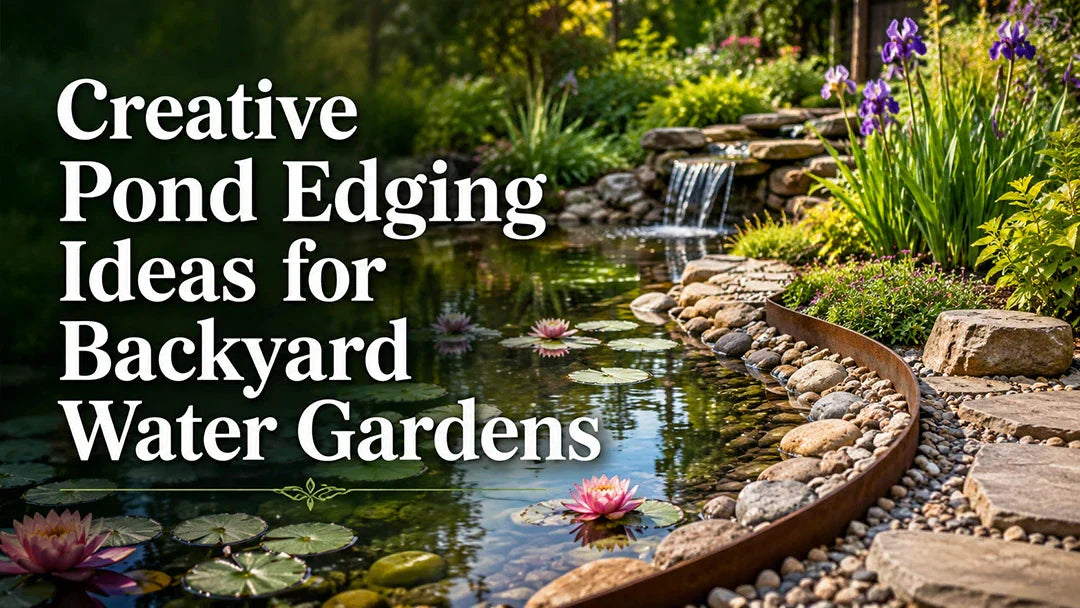
The pond edge, as a detail, can be easy to ignore, but it plays a big part in the overall design of the water garden. It keeps the soil from washing away, conceals the liner, and defines the transition from land to water. A poorly done edge can make an otherwise beautiful pond look incomplete, but a well-designed one does just the opposite. We'll explore some interesting ideas for building a pond edge with stones, plants, and design concepts that feel natural, not forced. Our aim, as a resource, is to provide information that will enable you to build a backyard water garden that looks settled, stable, and easy to maintain over the years.
Why Pond Edges Matter: Structure, Beauty, and Ecology
A pond edge does not merely function in decoration. It has three different roles: engineering support, visual framing, and ecological transition.
From a structural standpoint, this edge helps prevent erosion and soil from falling into the water. In addition, this edge protects the liner from sunlight, sharp objects, and foot traffic. Without edging, liners deteriorate faster and water level control becomes more difficult.
In terms of how it looks, the edge determines the character of the pond. If the edges are soft and irregular, this creates a very relaxed, very natural look. If the edges are hard and rigid, this creates a very formal, very controlled look. Neither is wrong, but each sends a different message.
From an ecological perspective, it's the pond's edge where everything is happening, especially in a shallow area where insects, amphibians, birds, and beneficial bacteria can thrive. A pond's edge should be designed to promote life instead of deterring it.
Common Materials Used in Creating a Pond Edge
When looking for pond edging design ideas, the majority of people work with different combinations of the following materials:
- Natural stone: Flat rocks and weathered boulders are good examples of rocks that can be used in edging around a pond because they weather well and complement garden beds nicely.
- Gravel or pebbles: Useful for filling in gaps to aid drainage — this refers to how water passes through the soil.
- Timber edging: Suitable for raised ponds but requires protection to prevent moisture damage.
- Concrete or paving stones: While easy to maintain and durable, paving stones are not as forgiving if the land shifts.

Natural materials tend to feel at home in gardens. The installation of hard materials requires precision.
The Function of Plants Located at the Edge of the Pond
Plants are what make a constructed pond a living landscape. Plants in areas around a constructed pond help soften stone edges and make transitions gradual.
Some examples of good choices include marginal plants, which are plants that can be grown in shallow water. Low ground covers and grasses are another option. These can be used to reduce erosion, shade the fish, and prevent algae growth by blocking out the sun.
This small planting strip can alter the entire feel of the pond.
Creative Pond Edging Ideas to Consider
In this section, we will look at ideas for edging a pond in practical ways for the average backyard.
1. Overlapping Flat Stone Edge
Lay flat stones so that they extend slightly out onto the water. This will cover up the liner, giving a shoreline effect. Don't place them too neatly in a row, as this will create a more organic look.
2. Boulder Anchors with Planting Pockets
Use a number of large rocks to hold back the pond's edge, and plant in between. This blurs the hard edges and allows plants to grow freely.
3. Gravel Buffer Zone
Instead of the grass directly meeting the water's edge, add a gravel border. This helps prevent mud, confines the lawn runoff, and provides the pond with a tidy but casual border.
4. Shelf-Style Stone Edging
You can also make a shallow ledge under the water surface and then add stones on top of it. This will serve as support for marginal plants and will also act as a resting place for both birds and frogs.

5. Raised Edge for Compact Spaces
A small border of stones that rises slightly from the rest of the ground helps to clearly delineate the area of the pond in small yards. It may also help to keep leaves and soil out of the water.
6. Waterfall-Integrated Edging
Where the waterfall enters the pond, stability is important. Reinforced stone edging helps to keep it in place instead of shifting because of water flow. The pump also plays a big part in this process.
It is possible to maintain water flow and prevent erosion near the edge with the Poposoap Electric Waterfall Pump Kit with Spillway.
7. Mixed Stone Sizes
Avoid using stones that are the same size. Using large and small stones together will give a shoreline a more natural appearance.
8. Plant-First Edging
Make plants the feature. Use stones to anchor the liner, then allow plants to cascade over them. Eventually, the boundary will be soft and welcoming to wildlife.

How to Keep Pond Edges Stable and Low-Maintenance Over Time
Good edging will save you time in the future. First, make a good base: compact the soil before laying the stones. Soil should not be loose, as it will make the edges sink.
Always overlap stones toward the water. This prevents rain from washing soil into the pond. Use underlayment (protective fabric) beneath heavy stones to reduce liner damage.
Frequent maintenance, however, is not necessary. Edges should be inspected every one or two years. Realign stones that have shifted. Trim any plants. Imperfections are often more attractive than perfection.
Stable edges protect your investment and make the pond look purposeful.
Conclusion
Pond edging plays an important part in defining how your water garden will be seen, will function, and will eventually develop over time. It provides support to your garden's construction while defining your garden's overall appearance and providing room for the growth of your plants and wildlife. Whether you're a fan of stone borders, or if you're fond of edging your garden with lots of plants or waterfalls, the key is balance.
For those homeowners who prefer a more uncomplicated system, complete Poposoap pond kits can greatly simplify things with compatible liners, pumps, and other components.
If hiding the exposed liner is an issue, this guide may help.

6′ x 6′ Pond Advanced Kit | 5-in-1 Filter, Waterfall, Lights, Pond Liner & Underlayment
$629.00
Build a backyard oasis with this 6x6 outdoor pond kit. Includes pond kits with waterfalls, liner, pump, filtration, LED lights and underlayment.
Frequently Asked Questions
What Is the Easiest Pond Edging to Maintain?
Natural stones with minimal plants look like they require minimal maintenance.
Is There a Requirement to Have Plants on the Edge of the Pond?
Not really necessary, though adding plants can improve the health of the water.
What Types of Rocks Are Good Edging Material for a Pond?
Flat stones that are smooth from weathering are good. Avoid stones with sharp edges that could scratch the liner.

Laisser un commentaire
Tous les commentaires sont modérés avant d'être publiés.
Ce site est protégé par hCaptcha, et la Politique de confidentialité et les Conditions de service de hCaptcha s’appliquent.