

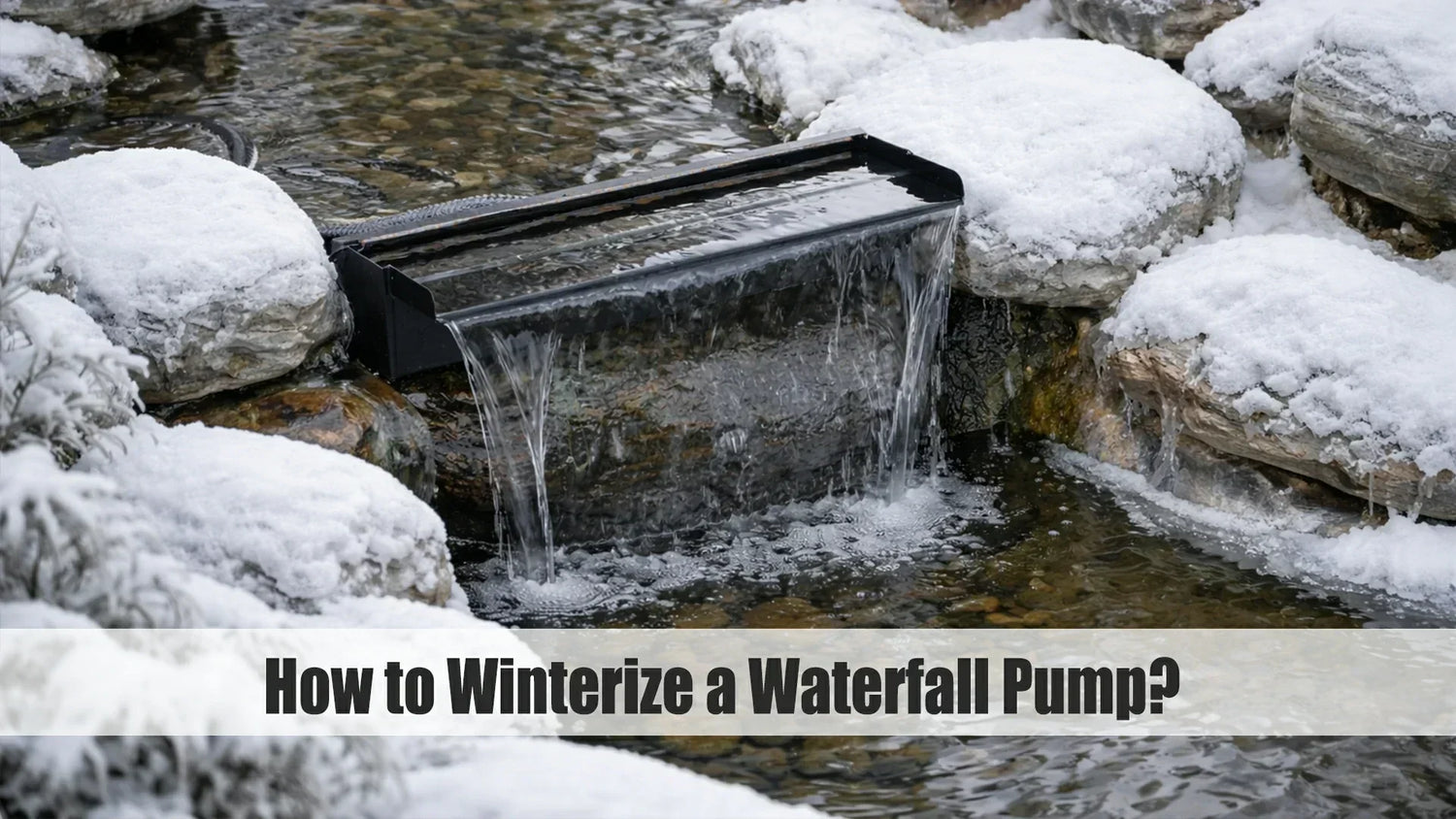
Most backyard waterfalls start to slow down when the cold weather starts to settle in. Water gets cold, ice forms overnight, and the next thing you know, the pump doesn't sound quite the same. That's usually the moment most homeowners go, “How do you winterize a water pump?”
It's a good question because winter is the season when pumps are most at risk. Ice, freezing water, and trapped moisture can crack housings, damage impellers, and shorten the life expectancy of even the strongest waterfall pumps. The good news is that winterizing doesn't have to be complicated. A simple DIY routine protects your pump and makes spring startup smooth and trouble-free.
This guide will walk you through how to winterize a waterfall pump DIY in both removable and in-place setups, with additional tips consistent with Poposoap's philosophy of building pumps that are low-maintenance, naturally resilient in different climates, and energy-efficient.
Why It's Important to Winterize a Waterfall Pump

Waterfall pumps are at the center of your water feature's ecosystem. During winter, several things work against them:
- Freezing water expands and cracks pump housings.
- Ice blockages strain the motor and reduce flow.
- Cold temperatures thicken debris and sludge.
- Still water grows bacteria and mineral buildup.
- Dry-running risks increase when water levels drop.
These problems, if left unaddressed, will result in costly repairs or a complete replacement once spring arrives.
Winterizing protects:
- The pump’s lifespan.
- The motor and impeller.
- The tubing and connectors.
- The structure of a waterfall itself.
Poposoap's waterfall pumps feature an efficient, low-watt motor designed to handle outdoor conditions, but even the most durable pumps benefit from proper winter care.
How to Winterize a Waterfall Pump: A Step-by-Step DIY Guide

Here's one simple winterizing method used by professionals and homeowners alike:
1. Turn the Pump Off
Turn the waterfall off and pull the plug. Allow the water to settle before handling the pump.
2. Remove the Pump from the Basin
Lift the pump out carefully. If your waterfall has a filter box or housing, remove that also.
3. Clean the Pump Thoroughly
Rinse the algae, leaves, and other debris off with clean water. Open the front cover and rinse the impeller until it spins freely. A clean pump is far less likely to corrode or seize up during winter.
4. Drain the Waterfall System
Remove as much water as possible from basins, tubing, and filter boxes. Water left behind will freeze and cause internal cracking.
5. Store the Pump Indoors
These pumps can be stored in a shed, garage, or an indoor storage area. Avoid freezing temperatures. Ideally, to keep the pump seals from drying out, the pump should stay in the bucket of clean water.
How to Winterize a Waterfall Pump Without Removing It
Some fountains or waterfalls are difficult to disassemble. If it is not feasible for you to take out the pump, try this:
1. Raise the Pump More
Put it inside a protective mesh or housing to avoid having ice build up around the motor.
2. Keep Water Circulating
Running the pump on low in mild winter conditions can prevent the complete formation of ice.
3. Insulate the Basin
Reduce full-surface freezing with the use of foam insulation or a floating device.
4. Regular Ice Removal
Gently remove surface ice to avoid blockages. Generally, this works best in locations that have a mild winter. Removal remains the safest option in colder climates.
Common Mistakes When Winterizing Waterfall Pumps
Even well-intentioned homeowners make a few common mistakes:
- Leaving the Pump in Freezing Water
It's one of the quickest ways to crack the motor housing.
- Using Chemicals to “Winter-Proof”
Chemicals don't prevent freezing and may damage seals or harm wildlife.
- Letting the Pump Dry Out Completely
Pump seals harden when stored dry for months.
- Not cleaning first
Debris left inside the pump becomes harder and more difficult to remove in spring.
- Forgetting the Solar Panel
Waterfall owners should wipe the panel and store it safely if removed.
Poposoap's solar waterfall pumps use outdoor-safe panels, but winter storage still protects them from debris or heavy snow.
Winterizing Solar Waterfall Pumps
Solar pumps make winterizing easier than traditional electric pumps. As they operate on low voltage DC and can be readily lifted out of a basin, storage is uncomplicated:
- Remove the pump and solar panel.
- Rinse both components.
- Dry them carefully.
- Store in a cool, indoor space.
Its lightweight construction and assembly without tools make this process quite easy with Poposoap's solar waterfall systems, even for a novice and the seasoned DIYer.

Conclusion - Protect Your Waterfall Pump and Enjoy a Worry-Free Spring
Winterizing your waterfall pump is a small seasonal task that pays huge dividends. Just a little cleaning and storing it correctly, your pump will reward you with a smooth run in the spring.
Whether it is a solar-powered system or the more traditional electric pump, the process is pretty straightforward and simple to do to protect your investment long-term. Poposoap's energy-efficient and solar waterfall pumps come with really easy maintenance; even a beginner will find caring for them in winter quite simple. A little preparation now ensures your waterfall comes back to life the moment warm weather returns.

70W 580GPH Solar Waterfall Pump Kit with 12"x4.3" Spillway
$248.99
Create stunning solar powered waterfalls with this 70W pump and spillway box. Ideal for eco-friendly pond features with strong, steady flow.
FAQs
Freezing water expands and cracks pump housings, ice blockages strain the motor, cold thickens debris, and trapped moisture damages components—all of which can shorten the pump’s lifespan or lead to costly repairs.
Yes. You can raise the pump in protective mesh, keep water circulating on low, insulate the basin, and regularly remove surface ice (this works best in mild winter climates; removal is safer in cold regions).
Remove the pump and solar panel, rinse both components, dry them carefully, and store them in a cool, indoor space. Poposoap's solar systems are lightweight and tool-free, making this process easy for beginners.
Leaving the pump in freezing water is the most damaging—it quickly cracks the motor housing. Other common mistakes include using chemicals (harmful to seals/wildlife) and storing the pump completely dry (hardens seals).
Clean the pump thoroughly first, then store it indoors (shed/garage, away from freezing temps). To prevent seal drying, keep the pump in a bucket of clean water.

Laisser un commentaire
Tous les commentaires sont modérés avant d'être publiés.
Ce site est protégé par hCaptcha, et la Politique de confidentialité et les Conditions de service de hCaptcha s’appliquent.