

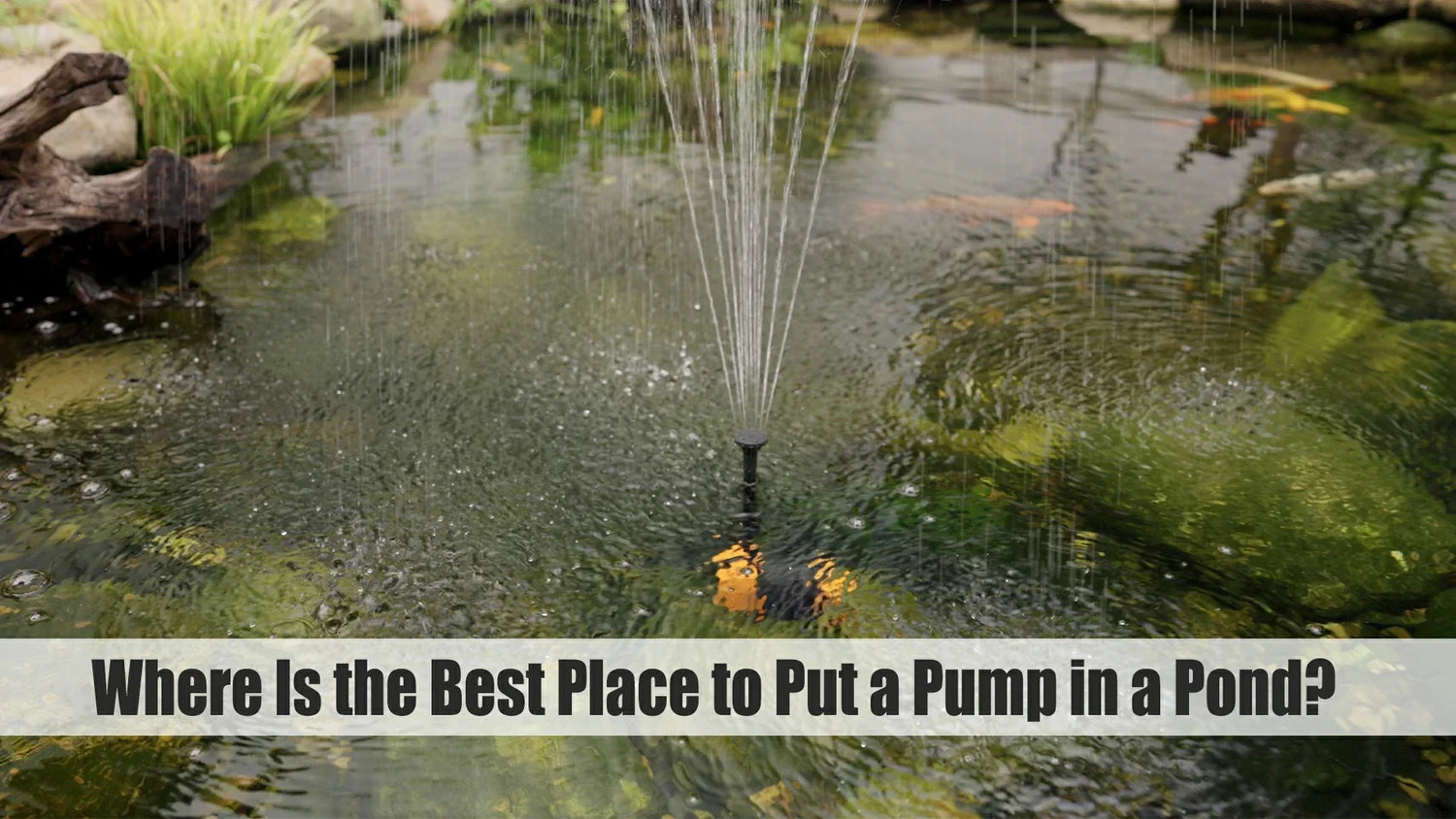
You've installed a beautiful pond, added some plants, perhaps even introduced fish, and now you're ready to keep that water fresh and moving. But once you have purchased the right pump, a new question arises: Where is the best place to put a pond pump? Placement is as important as pump size. Even the most powerful system won't perform properly if it's sitting in the wrong spot. Correct placement helps circulate water evenly, reduces debris buildup, and keeps the entire pond clear, oxygenated, and full of life.
Why Pump Placement in a Pond Matters
Besides simply moving water, a pond pump drives the entire ecosystem of the pond. It will help to distribute oxygen, support biological filtration, and prevent stagnation. By placing a pump in a pond, you are not just powering a fountain or waterfall, but rather creating a healthy circulation benefiting every part of the pond.
Consequences of Poor Placement
If the pump is out of position on the surface, too far down into sludge, or even caught in a corner, poor positioning will make the water not circulate as it should. You may notice algae growing where the water is still or that the water around the edges remains murky. In its proper placement, it ensures clean, oxygen-rich water reaches each corner of your pond to keep fish and plants healthy and thriving.
Introducing Poposoap Pumps
Submersible and solar pond pumps by Poposoap provide the balance of quiet operation, steady flow, and efficient water movement across ponds of all sizes.
General Rule: Circulate All Pond Water Once per Hour

As a rule of thumb, your pump should move the entire volume of water through the system every hour. That means:
- A 200-gallon pond would need approximately 200-400 GPH (gallons per hour).
- A 2000-gallon pond should have at least a 2000 GPH pond pump.
This hourly turnover prevents stagnant zones and makes for good oxygen distribution. However, the exact placement of your pump helps with how that circulation actually takes place. Not even a perfectly sized pump will work efficiently if water cannot reach it freely.
Best Places to Position Pond Pumps
If you're wondering where to put a pump in a pond, the simple aim is placing it where it will pull in and send out water equally. Here's what works best for most ponds:
- Center or deepest point: For most designs, this would be the ideal position for the pond pump, near the deeper part of the entire pond. This lets the cooler, more oxygen-depleted water that comes from below mix at the surface for even circulation.
- Opposite the waterfall or return line: Positioning the pump opposite your waterfall or filter outlet will stimulate full circulation—water will flow across the pond, rather than taking shortcuts and short-circuiting in one area.
- Slightly off the bottom: Position the intake of the pump a few inches off the bottom by placing it on a pump stand, rock, or brick to avoid clogging with sediment and leaves.

With solar systems, make sure the solar panel receives full sunlight, and use the extension cables Poposoap provides to position both the panel and pump where they work best together.
Placement of Pumps for Different Types of Ponds
Different pond styles call for slightly different placement strategies:
- Small decorative ponds or bird baths: The pump is installed in the middle for equal water movement with a natural ripple effect. In this simple installation, Poposoap solar fountain pumps are applicable; they are simple, quiet, and powered entirely by sunlight.
- For medium-sized ponds with fish: The pump should be set near the bottom at the deepest point, opposite of where the filter outlet or waterfall is positioned. This is so oxygen can circulate properly around the pond.
- Large or multi-level ponds: Depending on the size, you may require multiple pumps or a mix of Poposoap Solar Pond Filters and waterfall kits to provide complete coverage. For larger ponds, pumps would need to be distributed so no dead spots occur and clarity is maintained throughout each section.
- Ponds with waterfalls: The intake of the pump needs to be at the far end of the pond, directly opposite the waterfall spillway. This allows for a more natural flow pattern in which clean water is constantly cycled back into the system.
Common Pump Placement Mistakes
Even seasoned pond owners occasionally make mistakes with placement. Avoid these common mistakes:
- Setting the pump flat on the pond floor: This can let mud or other debris clog it and constrict water flow.
- Setting the pump too close to plants: Leaves, roots, and other organic matter can clog the intake.
- Not considering circulation patterns: Water should circulate in a loop. Putting the pump and return outlet too close together means most of the pond won't circulate properly.
- Underestimation of the effect of depth: Pumps that are too high will not mix lower layers of water, resulting in irregularities in both temperature and oxygen distribution.

The design team at Poposoap recommends using their filter boxes and pre-filter screens to minimize blockage and enable a continuous flow, especially for ponds that have a high amount of leaves or debris accumulating therein.
Tips for Optimal Pond Pump Performance
To maximize results following pump installation in a pond, here are some simple steps to follow:
- Clean the intake on a regular basis. Even with filters, it builds up debris. A quick rinse every few weeks keeps flow steady.
- Check the position of the cables. In solar installations, route the cords and panels appropriately to avoid possible shading or tangling of any kind.
- Mix with the right filtration. A Poposoap pond filter matching your pump's capacity ensures that there is better removal of debris, hence reduction of load on the motor.
- Monitor flow direction. Point the return water or waterfall so that the water moves across the pond rather than directly back toward the pump.
- Lift the pump off the floor. A simple stand helps prevent clogs and extends pump life.
These minor changes greatly improve circulation, reduce maintenance, and extend your pump system life.
Conclusion: Smart Placement Keeps Your Pond Healthy
Finding where is the best place to put a pond pump isn't complicated, but it makes all the difference. A well-placed pump ensures even circulation, reduces maintenance, and keeps your pond water fresh, clear, and full of life. Whether you're maintaining a small decorative pond or a larger ecosystem with fish and plants, Poposoap's submersible and solar pond pumps provide the performance, efficiency, and quiet reliability that every pond owner needs.

70W 580GPH Solar Waterfall Pump Kit with 12"x4.3" Spillway
$248.99
Create stunning solar powered waterfalls with this 70W pump and spillway box. Ideal for eco-friendly pond features with strong, steady flow.
FAQ: Pond Pump Placement & Circulation
You can, but not all positions yield good results, as putting the pump close to the edges or plants will reduce water movement and perhaps give an uneven flow.
Place it near the bottom, where there is less oxygen, so that it can help circulate air-rich water downwards while providing a calm surface flow for the fish.
Yes, especially if you have multiple Poposoap solar pumps, or use them in combination with a waterfall kit. For instance, the 55W to 70W solar pond filters push a strong, consistent flow capable of handling several hundred gallons per pond.

1 commentaire
Dotti
Pump placed in small lower end or large section of pond?
Laisser un commentaire
Tous les commentaires sont modérés avant d'être publiés.
Ce site est protégé par hCaptcha, et la Politique de confidentialité et les Conditions de service de hCaptcha s’appliquent.