

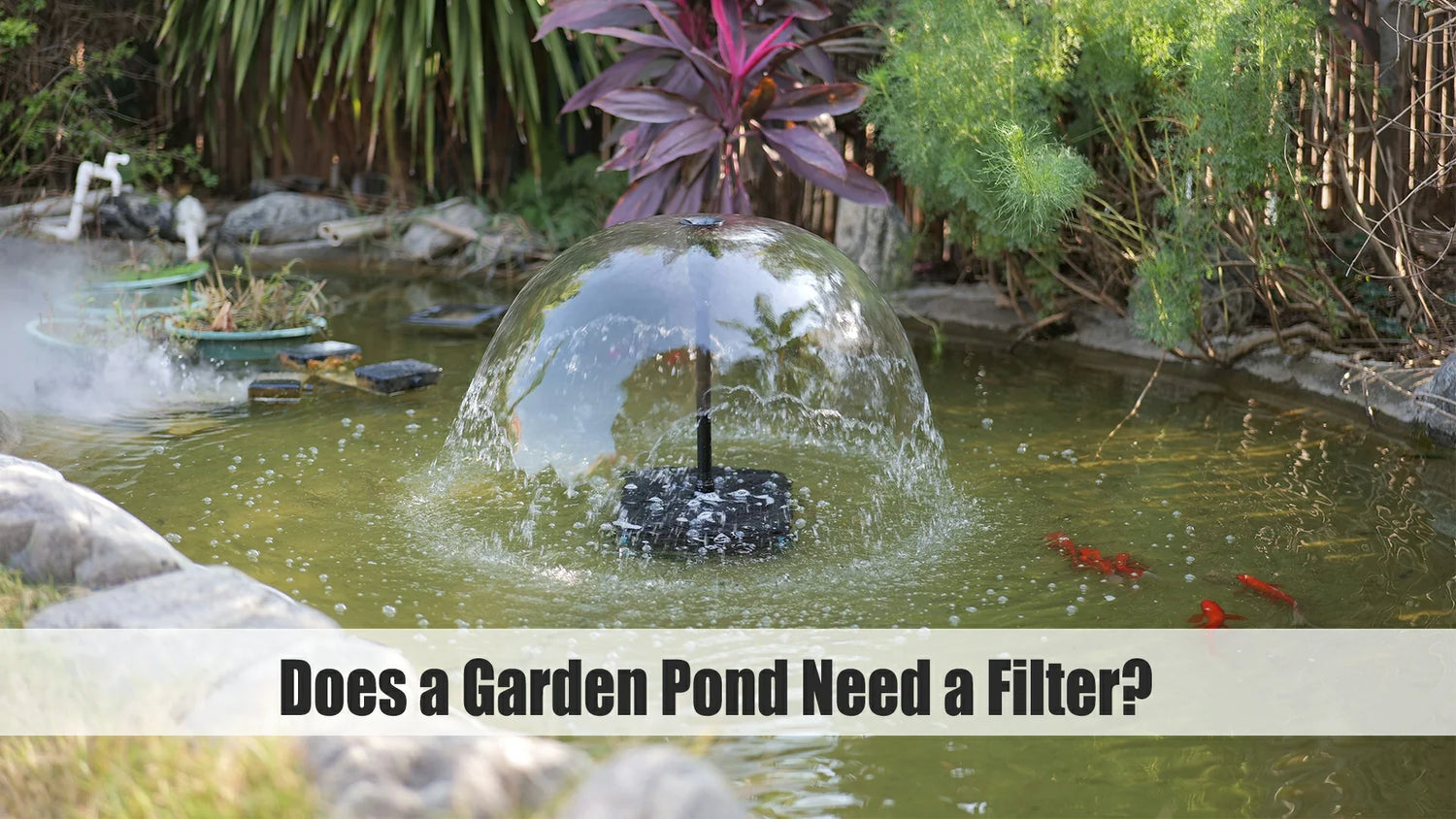
A backyard pond brings life, movement, and serenity to your garden-but keeping that water clear can be tricky. If you've ever watched algae bloom after a few sunny days or cloudy water after rain, you've probably wondered: Does a garden pond really need a filter?
That depends on the size, design, and intended use of your pond. While some small-sized wildlife ponds can get by quite well without filtration, decorative and those containing fish usually do require some form of mechanical or biological filtration. The key is to achieve the right balance between nature and technology.
Let's explore how modern garden pond filter systems work, what eco-friendly alternatives exist, and how Poposoap's solar pond filtration solutions bring both efficiency and sustainability to backyard water features.
Why Pond Filtration Matters

Filtration is necessary for water clarity, oxygen balance, and the health of the ecosystem. A pond that is not properly circulated or filtered will eventually accumulate debris, decomposing leaves, fish excrement, and algae. These organic matters break down and release nutrients such as nitrogen and phosphorus, which promote further algae growth and reduce oxygen levels.
Clean, well-filtered water is not only an aesthetic factor; it's crucial for fish and plants. Aerated water allows beneficial bacteria to prosper, dispose of waste in a healthy manner, and reduce the toxins of ammonia, among others. Without this natural cleaning process, a pond could quickly become cloudy and develop unhealthy odors, becoming non-supportive for aquatic life.
That's why modern pond systems, including Poposoap's solar-powered pump and filter combos, have been designed to work like nature's balance: continuous circulation, filtration, and oxygenation of water by way of renewable energy.
Does a Garden Pond Need a Filter?
It depends on the type of pond you have and what lives in it.
- Small decorative ponds (under 100 gallons): These can often remain clean with regular maintenance, natural plants, and minimal debris.
- Wildlife/natural ponds: Often self-sustaining if well-balanced with plants and shade.
- Fish ponds or koi ponds: definitely need filtration to remove waste and prevent ammonia buildup.
- Large ornamental ponds: These typically need both a filter and an aeration system to maximize clarity.
If the question is does a small pond need a filter, then yes, it usually does; it doesn't have to be electric or complicated. A compact solar-powered filtration system like Poposoap's pond filter kits can do the job of filtering small ponds pretty well while being eco-friendly and light on maintenance.
Understanding Garden Pond Filter Systems
Generally, pond filters come in three main types:
- Mechanical filters: pick up debris, leaves, and dirt.
- Biological Filters: These are home to the beneficial bacteria, which break down harmful chemicals into safer compounds.
- UV Filters: Employ ultraviolet light to kill spores of algae and bacteria and provide crystal-clear water.
A well-designed garden pond filter system integrates all of these features into an all-inclusive design, especially in the electric or solar-powered models. An example of this is Poposoap's solar filtration units, which employ a filter box with layered sponges and mesh to achieve both mechanical and biological filtration while being solar-powered, with no wiring necessary for installation.

Natural Pond Filtration Systems – Eco-Friendly Option
A natural pond filtration system uses plants, gravel, and microorganisms to clean the water organically. In essence, a small-scale ecosystem:
- Excess nutrients are absorbed by marginal plants such as cattails and iris.
- Floating plants, like water lettuce and lilies, serve to shade the pond from the sun, thereby reducing algae growth.
- Gravel beds trap debris and encourage beneficial bacteria.
- Water circulation by the solar pump enhances oxygen and nutrient distribution.
Natural systems are beautiful, quiet and sustainable — but they take time to establish. They also need balance; too few plants or too much debris can quickly overwhelm the system.
This is where hybrid works best: combining the solar filtration set-up of Poposoap with a plant-based system will ensure cleaning and minimum maintenance.
How to Keep a Pond Clear Without a Filter
In order to create a filter-free pond, you will rely more on its ecological balance and your manual care. Here's how:
- Use oxygenating plants like hornwort or anacharis to improve the quality of water.
- Add floating plants that will help block sunlight and limit the growth of algae.
- Avoid overfeeding the fish, because too much food decomposes rather quickly.
- Change 10–20% of the water every few weeks to reduce buildup.
- Circulate the water using a solar aeration pump.
- Regularly skim debris via a net or surface skimmer.
These are steps that mimic what a filter would do, but they do require regular attention. For hands-free maintenance, this compact Poposoap solar fountain with a filter box provides for continuous circulation and gentle filtration, powered completely by sunlight.
Pros and Cons — Filtered vs. Natural Pond
| Feature | Filtered Pond | Natural Pond |
|---|---|---|
| Best For | Koi and heavy fish populations | Wildlife and native plants |
| Water Clarity | Crystal clear | Variable; can be murky |
| Power Needs | Requires 24/7 electricity | None |
| Footprint | Compact filters available | Needs large plant zones (30–50% of area) |
Filtered Pond:
- Pros: Clear water, minimal upkeep, better for the fish, and very consistent.
- Cons: Requires setup, occasional cleaning, and energy, unless solar.
Natural Pond:
- Pros: Eco-friendly, quiet, low-cost, blends perfectly with nature.
- Cons: It requires patience and ongoing balance. It may turn cloudy seasonally.
For most modern homeowners, a solar pond filtration system provides the best of both worlds: low cost, no electricity, with consistent water quality and natural aesthetics.
Signs Your Pond Might Need a Filter
Even if your pond starts out clear, nature can rapidly shift the balance. Look for these signs:
- Green, cloudy, or murky water.
- Algae, which grow on the surface or rocks.
- Gasping by fish near the surface - oxygen depletion.
- Foul odors or floating debris.
- Poor water circulation or stagnant areas.
If any of these signs become evident, addition of a solar filter pump, like Poposoap's eco-series, would restore the clarity in days without interfering with the natural rhythm of a pond.

Combining Natural and Mechanical Filtration
The healthy ponds incorporate both systems. Mechanical filtration deals with large debris, while natural elements such as plants and gravel will naturally polish the water.
You can utilize a Poposoap solar-powered pump with a filter box for circulating and filtering the water while placing reeds, lilies, and water hyacinth around for biological cleaning. In this synergy, your pond water becomes clear, oxygenated, and self-sustaining.
Conclusion — Balance Is the Key to a Healthy Pond
So, does a garden pond need a filter? In most cases, yes-but it doesn't have to be electric or complicated. The healthiest ponds use both natural and mechanical filtration to maintain balance.
Poposoap filtered and solar pond pump systems have been created to do just that: bringing renewable solar power together with intelligent water filtration. They'll keep your pond clear, oxygenated, and environmentally friendly, proving that clean water and sustainable design go hand in hand.
Want to know how to build a low-maintenance pond filtration system for your garden on a limited budget? Click [here] to read more.

P2326D 40W 660GPH AC Pond Filter Fountain with Light
$89.99
Keep your pond water clear with the P2326D AC pond filter fountain. Includes pump, multi-stage filtration system, and built-in light for night beauty.
FAQs — Pond Filters and Natural Filtration
Yes, especially if it has fish or is in full sunlight. A small solar-powered filter should be sufficient for basic maintenance.
They help, but they cannot remove debris or introduce oxygen to water as well as a pump-filter combination.
A solar-powered system like Poposoap's pond filter kit will include both types of filtration: mechanical and biological.
Add oxygenating plants, and circulate the water with a solar fountain; also avoid overstocking fish.
Yes, although in winter you can reduce the flow or take out the pump while the pond is frozen.

Laisser un commentaire
Tous les commentaires sont modérés avant d'être publiés.
Ce site est protégé par hCaptcha, et la Politique de confidentialité et les Conditions de service de hCaptcha s’appliquent.